How to Test the Durability of Home Insulation Materials
Selecting home insulation requires looking beyond the basic R-value specification. The critical factor for long-term performance is material durability. This must be verified through standardized testing.
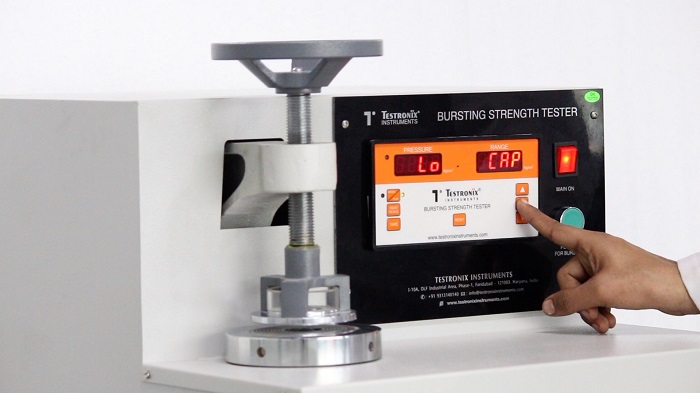
A fundamental property in this assessment is burst strength, which measures a material’s resistance to rupturing under multidirectional pressure. Durability testing determines whether insulation can survive installation stresses, environmental exposure, and decades of service without compromising its thermal performance.
Here, we’ll walk through the professional methods for evaluating the long-term strength and integrity of common insulation products.
Understanding Why Durability Matters in Insulation
Before you test anything, understand what durability actually means for insulation. It’s simple: the stuff has to keep working for years, not months. A durable product does three main things:
- Holds its R-value — no settling, no compressing, no losing performance over time
- Takes punishment — won’t tear, puncture, or crush easily during or after installation. This is where a test like burst strength comes in, directly measuring a material’s toughness against puncture forces.
- Handles the environment — shrugs off moisture, mold, extreme heat, freezing cold, repeat
Testing just tells you if it’ll still be good when the house is twenty years older. It gives you hard numbers—like a burst strength value from a digital burst tester—to prove a product can take the hits.
Key Testing Methods for Insulation Durability
Professional laboratories and quality control departments use standardized tests to measure these properties objectively. Here are the most critical methods:
1. Compressive Resistance and Thickness Recovery
This test simulates what happens when insulation is stacked, walked on in an attic, or has weight placed on it. A sample is compressed to a specified percentage of its original thickness for a set time.
After the load is released, the recovery is measured. High-quality batt or board insulation should spring back close to its original thickness, indicating it will maintain its designed R-value and fill cavities properly in the long term.
2. Tensile Strength (For Facings and Membranes)
The tensile strength test focuses on the facing, which acts as the insulation’s protective skin. A sample is pulled apart to measure the force required to tear it, indicating its durability.
The answer matters because that flimsy-looking layer is your main defense against moisture diffusion or heat loss. If it fails under the simple strain of being unrolled and stapled, it was never going to work on your wall.
3. Burst Strength (For Critical Integrity)
The burst strength test is one of the most revealing assessments for a material’s overall integrity and ability to resist sudden pressure from multiple directions. Unlike a simple puncture test, it applies a uniform, increasing force across the entire surface area of the sample.
For insulation, this is vital for understanding how it will perform when squeezed into irregular spaces or subjected to wind loads behind siding.
4. Moisture Absorption and Vapor Permeability
Moisture compromises insulation. It reduces R-value and can lead to rot and mold. To measure moisture absorption, a dry sample is weighed, exposed to high humidity, and then weighed again. The weight gain indicates how much moisture the material retains.
Separately, vapor permeability is about water vapor moving through a material. This is key to controlling indoor humidity and stopping condensation inside walls. A wall needs to manage both liquid water and vapor.
5. Dimensional Stability
Insulation needs to hold its shape. Since buildings experience temperature and humidity swings, materials are tested for dimensional stability through accelerated aging cycles. A sample is measured after being stressed with heat, cold, and damp conditions.
Failure here has direct consequences. The insulation may warp or shrink, leaving coverage gaps. Or it may expand and become compressed. In either case, thermal bridges form at these weak points, allowing heat transfer and reducing the wall’s insulating performance.
The Role of Standardized Testing Protocols
Test results only carry weight when everyone follows the same rules. Standardized protocols remove variables and make data comparable across labs and manufacturers. They cover sample size, conditioning time, temperature, equipment calibration—every detail that could shift the outcome.
The main standards used for insulation durability testing include:
- ASTM C165 — measures compressive strength of thermal insulation.
- ASTM C209 — test methods for cellulosic fiber insulating board.
- ISO 29767 — determines the tensile strength of faced insulation products.
- ASTM D3786 and ISO 13938-1 — diaphragm bursting strength, often applied to facings and thin membranes.
Following these standards ensures the reported performance is repeatable and trustworthy.
How to Interpret Test Results for Your Home Project
You won’t be running these tests yourself, and that’s okay. But the data they spit out is what separates a decent product from one that’ll actually last in your walls or attic. Forget the flashy ads—the truth is in the dry, detailed columns of a manufacturer’s technical data sheet. Get them. Compare them. It’s the only way to see past the marketing.
Focus on these specific durability measurements:
- Compressive Resistance: Reported in kPa or psi. Higher values resist crushing better.
- Burst Strength: Also in kPa. A measure of puncture resistance and material uniformity.
- Water Absorption: A percentage (by volume) after immersion. Lower numbers mean less moisture retention.
- Long-term Thermal Resistance (Thermal Drift): A projection of R-value stability over time. Seek products with the least predicted decline.
This factual approach moves you past marketing claims.
Conclusion
Choosing durable insulation is an investment in your home’s long-term efficiency, comfort, and structural condition. To make a fully informed choice, look beyond the initial R-value and consider durability testing, including compressive recovery, burst strength, moisture resistance, and dimensional stability.
These standardized tests provide objective data to predict a material’s performance not only at installation, but over decades. They show how well a product can endure physical pressure, environmental changes, and aging without losing its insulating ability.
The technical data sheet is your key resource. Compare specifications to make a data-driven choice, ensuring reliable performance, energy savings, and long-term protection for your home.
